
Porcelain Veneers: How They're Made and Placed
Deciding to ask about porcelain veneers is one thing; knowing what the appointments involve is another. This article sets out the general sequence. It is about veneer treatment in general, not about the process at any particular dental office, and it does not cover costs.
Where porcelain fits among the types of veneers
There are a few different types of veneers, including composite veneers, porcelain veneers, no-prep veneers and removable veneers (Cleveland Clinic).
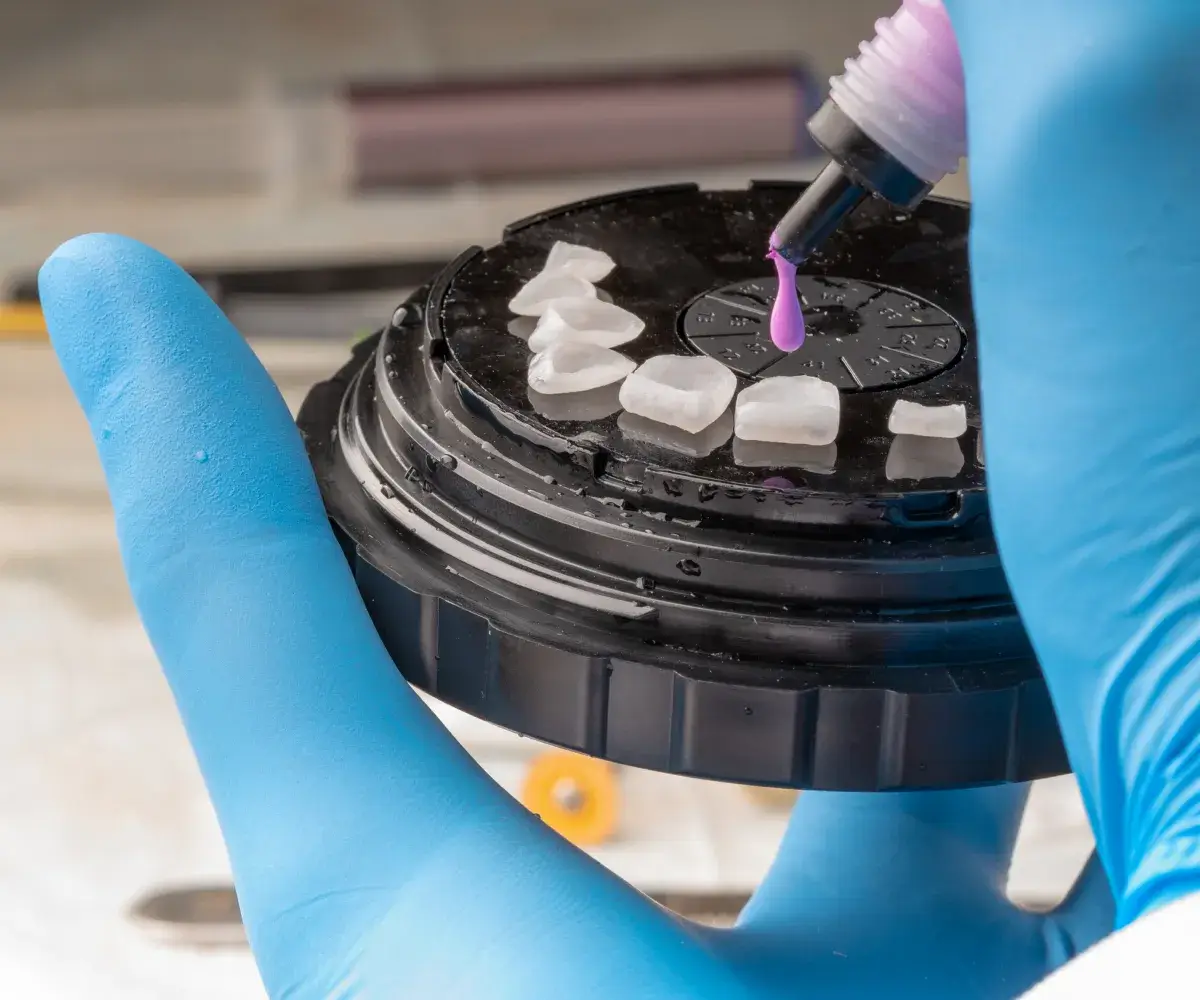
The two main types are porcelain and composite. A porcelain veneer is a thin shell custom-made to fit on the front surface of your teeth; porcelain veneers are strong, long-lasting and natural-looking, and they tend to be the more expensive option. A composite veneer is made from a tooth-colored filling material that is bonded to the tooth, and composite veneers may require less tooth enamel to be removed and fewer visits to the dentist (American Dental Association (MouthHealthy)).
The first visit: exam, enamel and impressions
The process generally runs from an initial appointment to a second office visit. During the initial appointment, your dentist will examine your teeth and gums to determine if you're eligible for veneers. If you're a candidate, they'll prepare your teeth by removing small amounts of enamel, and next they'll take impressions of your teeth (Cleveland Clinic).
Waiting on the lab
It can take a few weeks for the dental lab to complete your veneers. If necessary, your dentist can place temporary veneers in the meantime (Cleveland Clinic).
The second visit: fit, bonding and bite
During a second office visit, your dentist will check the shape, color and fit of your veneers, then permanently bond them into place using dental cement. Finally, they'll check your bite and make any necessary adjustments (Cleveland Clinic).
Enamel removal, and why the treatment is not reversible
Before placement, your dentist must remove some enamel from your natural teeth, and no-prep veneers still require some enamel removal (Cleveland Clinic). Treatment is not reversible because tooth enamel is removed to place a veneer (American Dental Association (MouthHealthy)).
Next steps
What veneers are in general is the subject of a separate article on what veneers are, and there is another on caring for veneers.
We're Dental Associates of Lodi, in Lodi, New Jersey, and Dr. Steven Liao is our dentist. See also our veneers page. If you are planning a first visit, start with our first-visit page.
Sources
- Cleveland Clinic. "Veneers." Updated 2022-07-18. https://my.clevelandclinic.org/health/treatments/23522-dental-veneers
- American Dental Association (MouthHealthy). "Veneers." https://www.mouthhealthy.org/all-topics-a-z/veneers