

Emface for TMJ: What to Ask Before Treatment
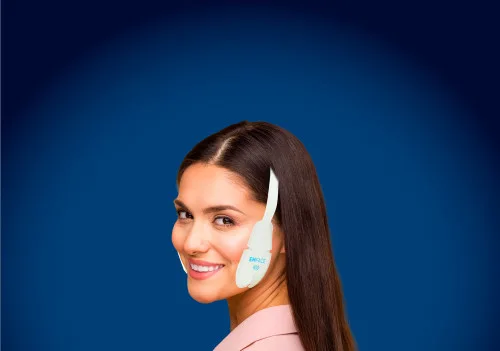
If your jaw aches, feels stiff or clicks painfully, you may have seen Emface promoted for TMJ. BTL, the company that makes Emface, lists treating temporomandibular joint (TMJ) dysfunction and associated pain among its uses (BTL Industries).
A manufacturer’s list of uses is not the same as knowing what is behind your own symptoms, or how a treatment will work for you. This article covers what the jaw problem itself may be, what the manufacturer says about Emface, what a related FDA record shows, and the questions worth taking to a consultation.
Considering Emface? Call us at 862-247-8030.
TMJ or TMD?
“TMJ” refers to the temporomandibular joint, the jaw joint itself, and you have two of them, one on each side of the jaw. The conditions that cause trouble there are temporomandibular disorders, or TMDs: a group of more than 30 conditions that cause pain and dysfunction in the jaw joint and the muscles that control jaw movement (National Institute of Dental and Craniofacial Research).
In everyday speech, “TMJ” often stands for the problem as well as the joint. In this article, TMD means the disorder.
Symptoms that may signal a TMD
Symptoms that may signal a TMD include pain in the chewing muscles or the jaw joint, which is the most common symptom; pain that spreads to the face or neck; jaw stiffness; limited movement or locking of the jaw; painful clicking, popping or grating in the jaw joint; ringing in the ears, hearing loss or dizziness; and a change in the way your upper and lower teeth fit together (National Institute of Dental and Craniofacial Research).
Clicking on its own is a different matter. Clicking or popping sounds in the jaw joints without pain are common, are considered normal, and do not require treatment (National Institute of Dental and Craniofacial Research).
Many TMDs last only a short time and go away on their own. In some cases, though, they can become chronic, or long-lasting (National Institute of Dental and Craniofacial Research).
How jaw pain is evaluated
There is no widely accepted, standard test to diagnose TMDs, and diagnosis can be difficult because TMDs can have different causes and symptoms that overlap with other conditions. Pain in the mouth, jaw or face may or may not be related to a TMD, and a doctor or dentist may have to rule out other conditions before diagnosing one (National Institute of Dental and Craniofacial Research).
In general, a doctor or dentist will note your symptoms and take a detailed medical history, asking about the pain: where and when it occurs, what makes it better or worse, and whether it spreads. They may examine your head, neck, face and jaw for tenderness, clicking or popping, or difficulty with movement, and may recommend imaging tests such as an x-ray, MRI or CT scan (National Institute of Dental and Craniofacial Research).
Knowing what is behind your symptoms makes every later decision easier to weigh, including a decision about Emface.
What the manufacturer says Emface is for
BTL says Emface combines synchronized radiofrequency with HIFES muscle stimulation. For the jaw, BTL describes the radiofrequency as raising tissue temperature to relieve symptoms associated with muscle spasms and to improve local circulation, and the HIFES stimulation as activating the jaw muscles (BTL Industries).
BTL lists these uses for Emface Functional TMJ: to relieve symptoms associated with muscle spasm, to treat temporomandibular joint (TMJ) dysfunction and associated pain, muscle re-education, increasing blood flow, and to maintain or increase mandibular range of motion (BTL Industries).
These are the manufacturer’s stated uses. They describe what the device is meant for, not how well it works for any one person.
What the FDA record shows
FDA’s 510(k) database lists K243290, a device called BTL-785MJ from BTL Industries, classified as a powered dental muscle stimulator, with a decision of “Substantially Equivalent” dated May 9, 2025 (U.S. Food and Drug Administration).
Its cleared indications for use are to relieve symptoms associated with muscle spasm, to treat temporomandibular joint (TMJ) dysfunction and associated pain, muscle re-education, increasing blood flow, and to maintain or increase mandibular range of motion, and it is marked for prescription use (U.S. Food and Drug Administration).
The TMJ uses BTL lists for Emface (BTL Industries) match, word for word, the indications in this FDA 510(k) clearance for a BTL device, BTL-785MJ (K243290) (U.S. Food and Drug Administration). BTL’s page does not name that FDA device (BTL Industries), and the FDA record does not name Emface (U.S. Food and Drug Administration).
So the two documents show matching wording, not that the two names refer to the same device.
What that clearance was based on
In its May 9, 2025 letter for K243290, FDA says it reviewed BTL Industries’ 510(k) premarket notification and determined the device substantially equivalent, for the indications stated, to legally marketed predicate devices, so the device may be marketed subject to the general controls of the law (U.S. Food and Drug Administration).
The 510(k) summary says the determination was based on the intended use, a comparison of technical characteristics and performance testing. It says the device was evaluated for electrical safety against medical device standards, and that a clinical study was not conducted for this submission (U.S. Food and Drug Administration).
What a session involves, according to BTL
BTL says that during an Emface session you feel gentle muscle contractions combined with a warming sensation. It describes its standard protocol as four 20-minute sessions, typically spaced one week apart, and adds that a provider may recommend a customized plan (BTL Industries).
That is the manufacturer’s general description rather than a plan for jaw treatment in particular, so it is worth asking what would be suggested for you and why.
Safety information to raise beforehand
BTL’s safety information says results may vary. During treatment you may feel heat, but you should never feel an unpleasant burning or pain sensation. Treatment should not be applied over hair or scar tissue, or if you have electronic or metal implants, and side effects may include temporary damage to the skin: crust, blister and burn (BTL Industries).
BTL also says that, as with any medical procedure, you should ask your doctor whether the procedure is right for you (BTL Industries).
That information is not a complete list of who should or should not have treatment. Tell us about any implants, scars, skin concerns and other health considerations at your consultation.
Other approaches to jaw pain
Because evidence for many TMD treatments is limited, experts recommend conservative treatments and avoiding treatments that permanently change the jaw joints, teeth or bite, or involve surgery (National Institute of Dental and Craniofacial Research).
When you first feel discomfort in the jaw joints or muscles, a doctor or dentist may suggest eating soft foods; applying heat or cold to the face together with exercises that gently stretch and strengthen the jaw muscles; taking over-the-counter pain medicines such as nonsteroidal anti-inflammatory drugs (NSAIDs) like ibuprofen; and cutting back on habits such as jaw clenching, gum chewing or nail biting (National Institute of Dental and Craniofacial Research).
If simple steps do not help, or a doctor or dentist identifies a specific type of TMD, other treatments may be recommended. Research suggests that manual therapy, a type of physical therapy, can help improve function and relieve pain, and that behavioral approaches such as cognitive behavioral therapy and biofeedback can help manage TMDs. Intraoral appliances, also called nightguards or splints, fit over the teeth and may help with habit reversal such as jaw clenching, though there is not a lot of evidence on whether they improve TMD pain, and an appliance should not be designed to permanently change your bite (National Institute of Dental and Craniofacial Research).
Botulinum toxin type A works by relaxing muscles and is FDA-approved for some medical conditions, such as migraines, but not for TMDs. Studies of it for TMDs have had mixed results, and it remains unclear whether it is effective for relieving TMD symptoms (National Institute of Dental and Craniofacial Research).
NIDCR’s tips for anyone who thinks they have a TMD are to consult a dentist or doctor, learn about the TMD they have, start with simple treatments first (TMD symptoms often go away on their own), discuss the potential benefits, risks and alternatives before any irreversible treatment, and consider a second opinion from an orofacial pain specialist if possible (National Institute of Dental and Craniofacial Research).
If we suggest Emface for you, we can explain how it fits alongside these approaches and why we are discussing it for your particular concern.
Questions to ask before treatment
- What is causing my jaw pain? Has a TMD been diagnosed, and if so, which kind?
- Which simpler options have I tried, and which are still worth trying?
- The manufacturer lists specific uses for Emface Functional TMJ. Does my problem fit them?
- What evidence supports using Emface for a jaw problem like mine, and can you point me to it?
- What change, if any, might I expect, how soon, and how long might it last?
- Which of my symptoms, if any, is it meant to address: pain, tension, clenching, grinding or clicking?
- How many sessions would you suggest for me, and why?
- Is there anything to plan for afterward, such as recovery time or a skin reaction?
- Is it suitable for me, given my health, any implants or scars, hair over the area and my skin?
- What should I report to you during a session?
- How will we judge whether it is helping, and what happens if it does not?
Talk to us about Emface
We offer Emface at our office. If jaw pain, tension or clicking is on your mind, call us at 862-247-8030 or book a consultation, and bring the questions above with you. You can also read more on our Emface page. If your interest is the facial treatment rather than jaw pain, see what to expect from an Emface facial treatment.
Sources
- National Institute of Dental and Craniofacial Research. “TMD (Temporomandibular Disorders).” https://www.nidcr.nih.gov/health-info/tmd
- U.S. Food and Drug Administration. “510(k) Premarket Notification K243290.” https://www.accessdata.fda.gov/scripts/cdrh/cfdocs/cfpmn/pmn.cfm?ID=K243290
- U.S. Food and Drug Administration. “K243290: FDA substantial equivalence letter, Indications for Use and 510(k) Summary (BTL-785MJ).” Published 2025-05-09. https://www.accessdata.fda.gov/cdrh_docs/pdf24/K243290.pdf
- BTL Industries. “Emface.” https://bodybybtl.com/solutions/emface