
Comparing Full-Mouth Reconstruction Plans: Questions to Ask Before You Commit

A treatment plan for extensive dental work arrives as a list of procedures with a figure attached. If you are holding such a plan — or plans from different practices — the difficult part is knowing what you are actually comparing: what the plan includes, who would carry out each part, how long it runs, and what the figure covers.
What follows is a set of questions to take into that conversation. It quotes no prices, because a price attached to someone else's mouth tells you nothing about your own. If you are still working out what the term itself covers, that is the subject of a separate article on what full-mouth reconstruction is.
What does the plan include?
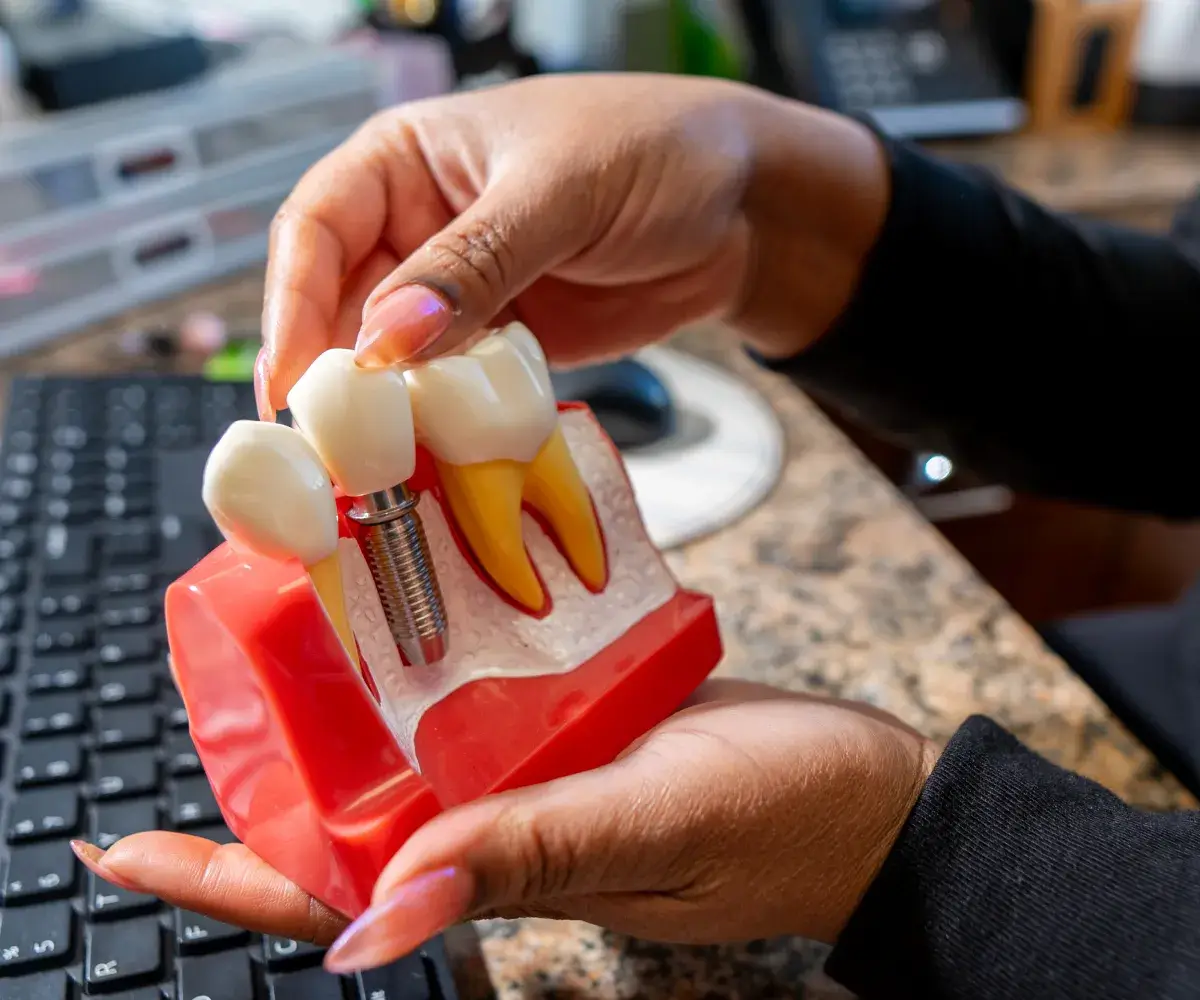
Plans of similar length can contain quite different work. Full mouth reconstruction treatments can include onlays, crowns, bridges, veneers, dental implants and/or dentures (American College of Prosthodontists).
Which of those a plan proposes, and for which teeth, is where a comparison starts. Ask:
- Which treatments does this plan include, and which teeth does each one apply to?
- Which items does the plan treat as necessary, and which as optional?
- What is deliberately not in the plan, and would it be quoted separately?
- Why this combination rather than another, and what were the alternatives?
Who would carry out each part?
A plan is also a statement about people. The American College of Prosthodontists says that a consultation with a prosthodontist will be required for a procedure of this scale, and that a team of professionals often work together to accomplish the task (American College of Prosthodontists).
A prosthodontist is a dental specialist who makes crowns, bridges and dentures and provides other restorative treatments, and after dental school they receive three or four more years of residency training. Your general dentist may offer many of these procedures, but will likely refer you to a prosthodontist if your case is complex or if they need to coordinate treatment (Cleveland Clinic).
So it is fair to ask, plan by plan:
- Who performs each part of the work, and where?
- Which parts, if any, would be carried out by someone other than the dentist presenting the plan?
- Who holds the plan together between stages, and who do you contact between appointments?
How many stages, and how long between them?
Sequence and timing are part of what you are comparing, and they are easy to leave implicit in a quote. The implant-supported denture process usually requires multiple steps, and exact treatment depends on your specific situation; generally, it takes about three to six months for the implants to fuse with your jawbone (Cleveland Clinic).
Questions that turn a sequence into something you can compare:
- How many stages does this plan have, and what happens at each?
- How long is each gap, and what sets its length?
- What will I be wearing or managing with in between?
- If something found during treatment changes the plan, how are the stages and the quote revised?
What may need replacing later?
A quote describes the work it lists, not the years after it. The restoration part of a dental implant might need to be replaced at some point: most crowns and bridges last around 15 years, and most dentures last at least seven years, though this timeline varies (Cleveland Clinic).
So, for each plan:
- Which parts are expected to be replaced eventually, and which are not?
- What upkeep or review does each part need, and how often?
- What would a later replacement involve, and would it be quoted at the time?
- Is anything covered by a guarantee or warranty, and is that in writing?
Cost, as questions
No article can tell you what your own plan should cost; that depends on what is in it and who carries it out. What questions can do is make quotes comparable, so that a lower figure is not simply a shorter plan.
On cost, ask each practice:
- Is this a quote for the whole plan, or an estimate for part of it?
- What does each line include — the procedure itself, laboratory work, imaging, follow-up visits?
- What is excluded?
- How does the quote change if the plan changes during treatment?
- How and when is payment due, and what happens with insurance?
We verify insurance before treatment and file claims, and our insurance and payment page lists PPO plans and mentions CareCredit and payment plans. How any of that applies to a specific plan is a question to ask us rather than something a page can settle.
Before you commit
Ask for the plan in writing, and for the answers to these questions in writing where it matters. Then put the plans beside each other and compare them item by item: the clearer plan is the one you can actually check.
Our office is at 147 Main St, 2nd Floor, Lodi, NJ 07644. Our first-visit page and our dental implants page are on this site.
Sources
- American College of Prosthodontists. "Full Mouth Reconstruction." https://www.gotoapro.org/full-mouth-reconstruction/
- Cleveland Clinic. "Prosthodontics." Updated 2026-05-19. https://my.clevelandclinic.org/health/treatments/23904-prosthodontics
- Cleveland Clinic. "Implant-Supported Dentures." Updated 2022-10-18. https://my.clevelandclinic.org/health/treatments/24303-implant-supported-dentures
- Cleveland Clinic. "Dental Implants." Updated 2026-06-11. https://my.clevelandclinic.org/health/treatments/10903-dental-implants