
Implant-Supported Dentures vs. Traditional Dentures: How They Differ
Dentures come in more than one form, and the words for them — traditional, implant-supported, fixed, removable — get used loosely. The sections below set out how each kind works, so you can take specific questions to a dentist. Nothing here ranks one option above another.
Traditional dentures
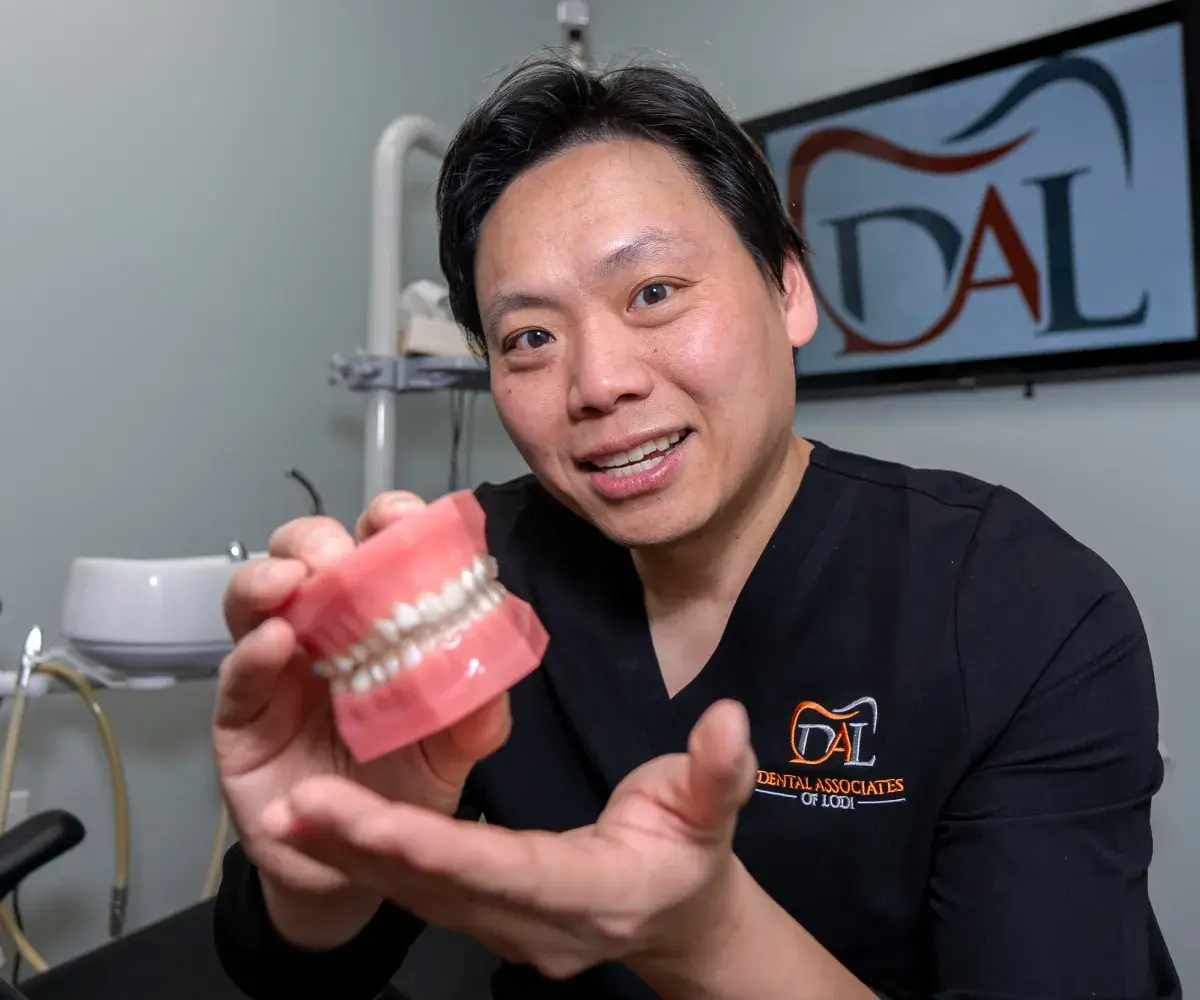
Dentures are removable oral appliances that replace missing teeth in your upper jaw, lower jaw or both. A full denture rests atop your gums. Many traditional denture wearers complain that their appliances shift, wobble or slip out of place when they're speaking or chewing. The average lifespan of a denture is seven to 10 years (Cleveland Clinic).
Implant-supported dentures
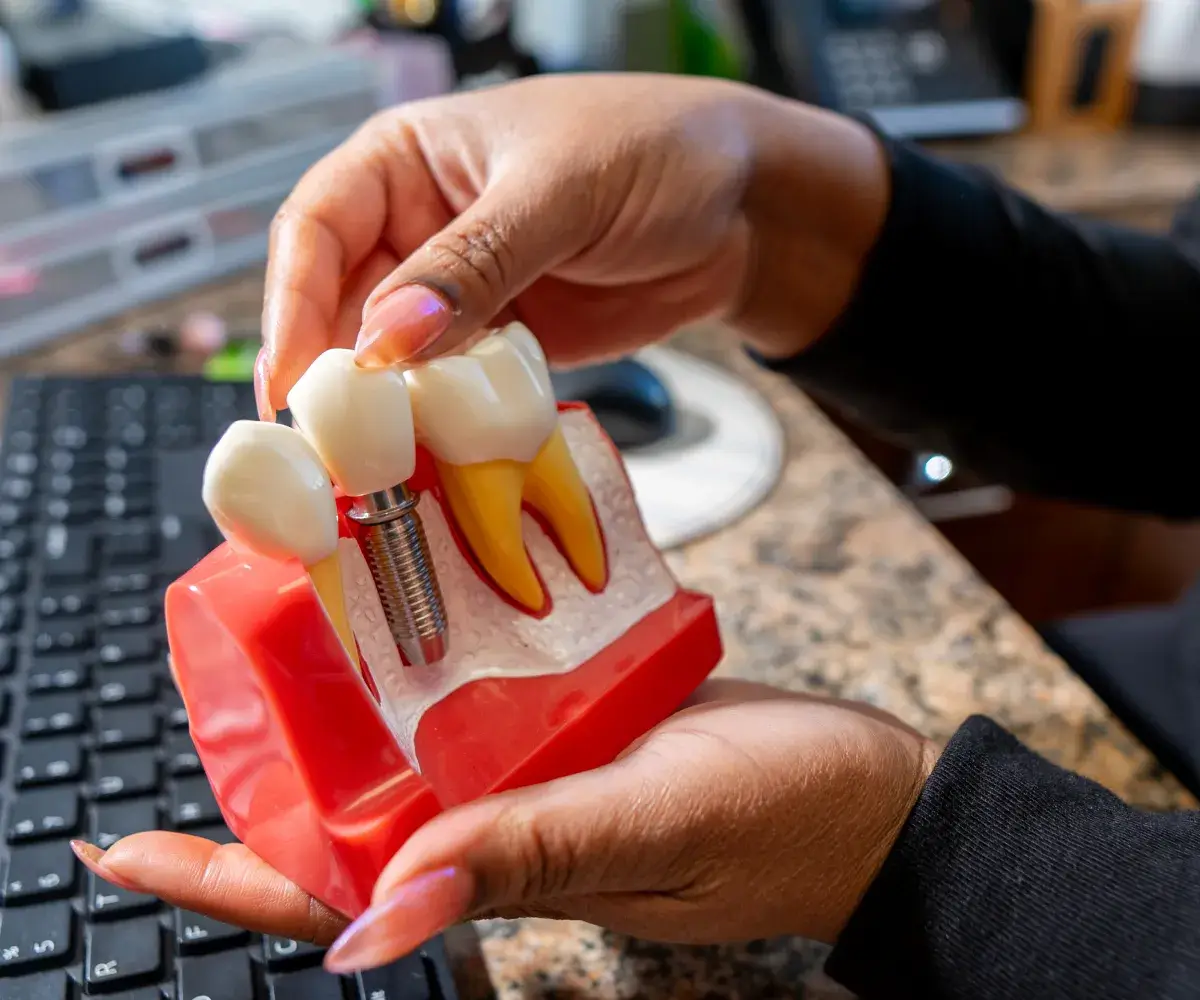
An implant-supported denture is an oral appliance that replaces several teeth at once. It is similar to a traditional denture, but instead of resting on top of your gums, it attaches directly to your jawbone using dental implants. A healthcare provider may recommend implant-supported dentures for someone missing most or all of their teeth (Cleveland Clinic).
Fixed or removable
There are fixed and removable versions. A removable one "snaps on" to dental implants in your jawbone, while a fixed denture — sometimes called a hybrid denture — attaches permanently to dental implants and can't be removed at home, though your dentist can remove it for maintenance when necessary. Which is right depends on several factors, including the health of your jawbone, your medical history and your personal preferences (Cleveland Clinic).
"All-on-4®" is a specific type of fixed implant denture: a method that replaces an entire arch of missing teeth using just four dental implants (Cleveland Clinic).
Enough bone in the jaw
To qualify for implant-supported dentures, you must have enough bone in your jaw to accommodate the dental implants, and in many cases dental bone grafts can help add volume and density to areas where you have lost bone (Cleveland Clinic).
Risks and replacement
Implant-supported dentures carry some risks, though they are usually minimal, and possible complications include infection, nerve damage, injury to your mouth and sinus perforation (Cleveland Clinic).
For best results, you will need to replace the overdenture every 15 to 20 years (Cleveland Clinic).
Taking the question to a dentist
The comparison above is here to give you the words for a conversation: what holds the appliance in place, whether it comes out, what your jaw has to support, and what upkeep means over the years. A dentist can say which of those matter in your own case.
Related reading on this site goes further on full-arch dental implants and on implant, bridge or denture for a missing tooth. There is also our dental implants page.
Our office is at 147 Main St, 2nd Floor, Lodi, NJ 07644, and Dr. Steven Liao is our dentist. To take these questions further, see our first-visit page.
Sources
- Cleveland Clinic. "Dentures." Updated 2023-03-10. https://my.clevelandclinic.org/health/treatments/10900-dentures
- Cleveland Clinic. "Implant-Supported Dentures." Updated 2022-10-18. https://my.clevelandclinic.org/health/treatments/24303-implant-supported-dentures